In the regions of Béja and Jendouba, in north-western Tunisia, water is scarce, soils are eroding, and women are too often the last to access training and decision-making. This is where, since January 2026, a European consortium has been working to build something concrete: skills in hydroponic farming, a women-led agricultural cooperative, and a recognised training pathway. Before any of that, we chose to stop and listen. This first edition tells you how the project began, where we stand today, and what is coming over the next few months.
Hydroponics, rural women and cooperative development in Tunisia
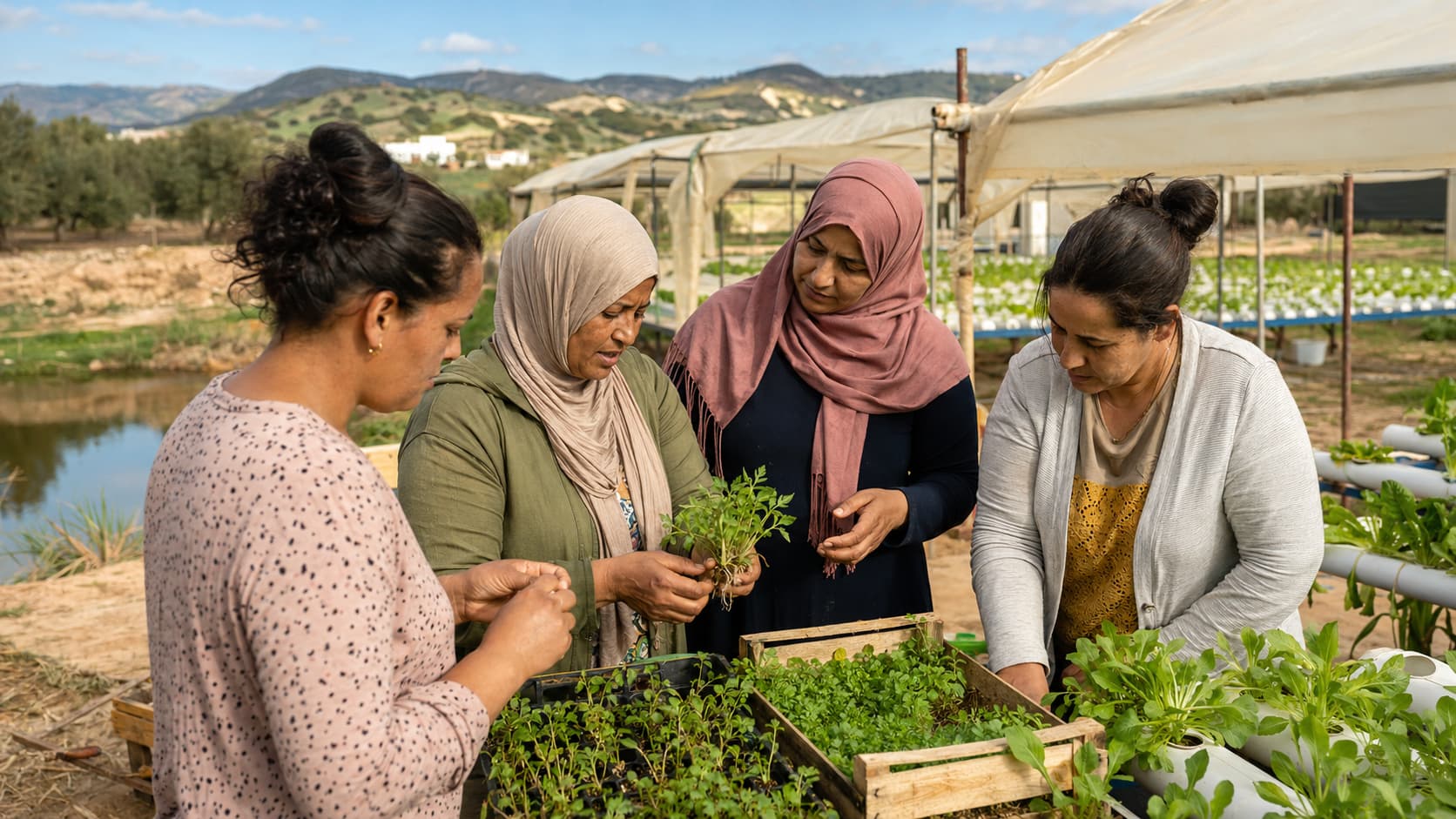
SHE-GROWS is a three-year project funded by the European Union under the Erasmus+ Capacity Building for VET programme. Its purpose is to train sixty women in the governorates of Béja and Jendouba in hydroponic farming techniques and the principles of cooperative entrepreneurship, in an area where climate change and gender inequality intersect particularly sharply.
Hydroponics, the practice of growing crops without soil, using nutrient solutions instead, can cut water consumption by up to ninety per cent compared with conventional agriculture. In a context of mounting water stress, that is not a neutral technical choice: it is one of the few credible answers available.
The project does not stop at training. The end goal is the establishment of a legally constituted women's agricultural cooperative, able to reach local markets and turn newly acquired skills into real economic independence.
The training pathway also delivers something rare in projects of this kind: a dual qualification recognised in both Europe and Tunisia. For the women who complete it, this will not be a symbolic certificate but a credential that holds weight in both educational and professional systems, jointly built by European and Tunisian training centres and validated at institutional level.
How it began: the kick-off in Tunis
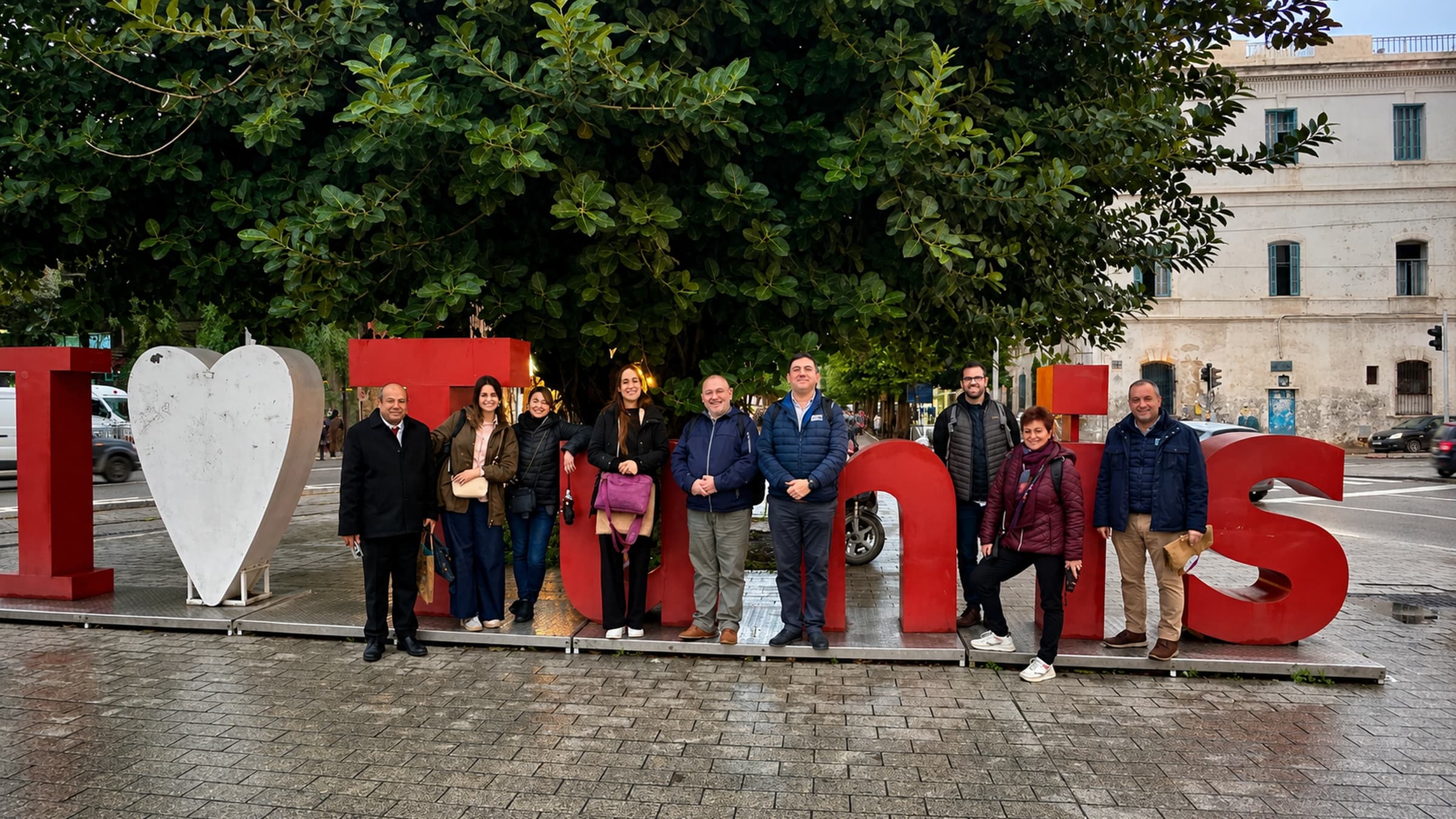
The consortium met for the first time in Tunis from 10 to 12 February 2026, hosted by the Union Tunisienne de l'Agriculture et de la Pêche, the project's Tunisian agricultural partner. Three days were spent setting governance arrangements, fine-tuning the work plan, building operating procedures across countries and cultures, and laying the foundations of trust between the European and Tunisian partners.
Two underlying choices were confirmed in Tunis. The first was to invest the opening phase of the project in fieldwork before designing any training. The second was to place the day-to-day coordination of activities in Tunisia in the hands of the three local partners, so that listening and territorial roots come first.
Read the full articleResearch before training
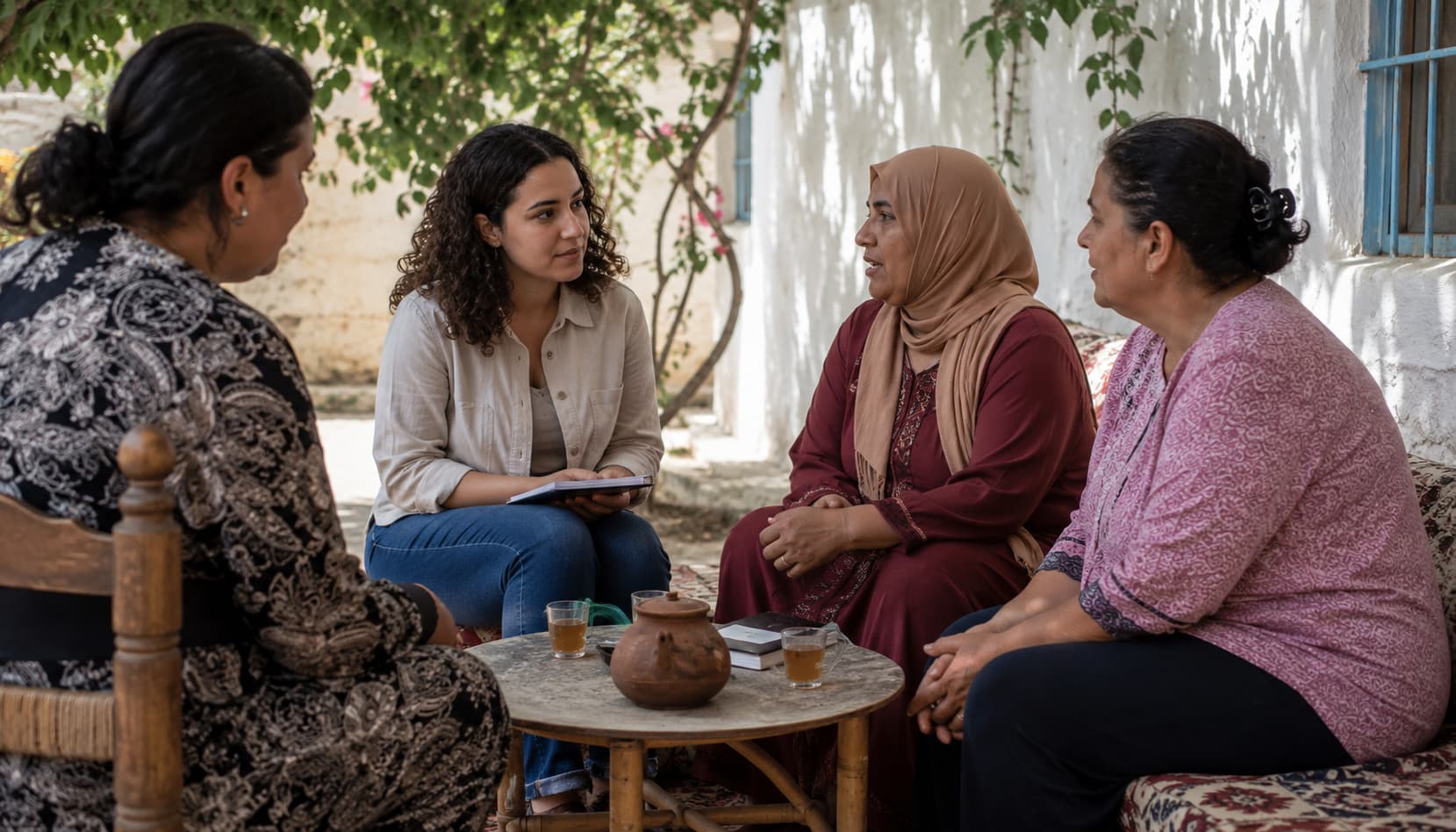
Designing a curriculum before understanding the context is one of the most common mistakes in rural development. SHE-GROWS has taken a different approach.
Before drafting a single training module on hydroponics or cooperative entrepreneurship, the consortium is investing the first eight months of the project in structured, participatory research across the target areas. The work is guided by the Research Design Framework, developed by OpenCom as research coordinator and shared with the full partnership.
Between April and July 2026, the Tunisian partners are running a quantitative survey that will reach between eight hundred and one thousand respondents, alongside in-depth interviews, focus groups with rural women and community leaders, and case studies on local farming practices. Five analytical dimensions shape the research: socio-economic, cultural and gender-related, training, agronomic, and cooperative.
The findings will feed into the Gender-Responsive Mapping Report, due in August 2026, which will become the evidence base for curriculum design, the Train-the-Trainers programme and the cooperative model.
Read the full articleSix organisations, four countries
SHE-GROWS brings together vocational training centres, research and communication organisations, technology specialists and agricultural representative bodies. The geographical balance reflects the project's nature: three European partners and three Tunisian partners, with shared responsibilities throughout.
ATFP (Agence Tunisienne de la Formation Professionnelle), APIA (Agence de Promotion des Investissements Agricoles), AFRJ (Association des Femmes Rurales de Jendouba). They underpin the project's institutional dialogue and territorial roots.
The project website is live
The project website is the public entry point to everything SHE-GROWS produces: news, articles, training products, partner profiles and the archive of disseminable documentation. It is available in English, French and Arabic, the three working languages of the consortium and of the territories involved.
The project is also active on Facebook, Instagram, LinkedIn and YouTube, with regular updates on activities under way.